
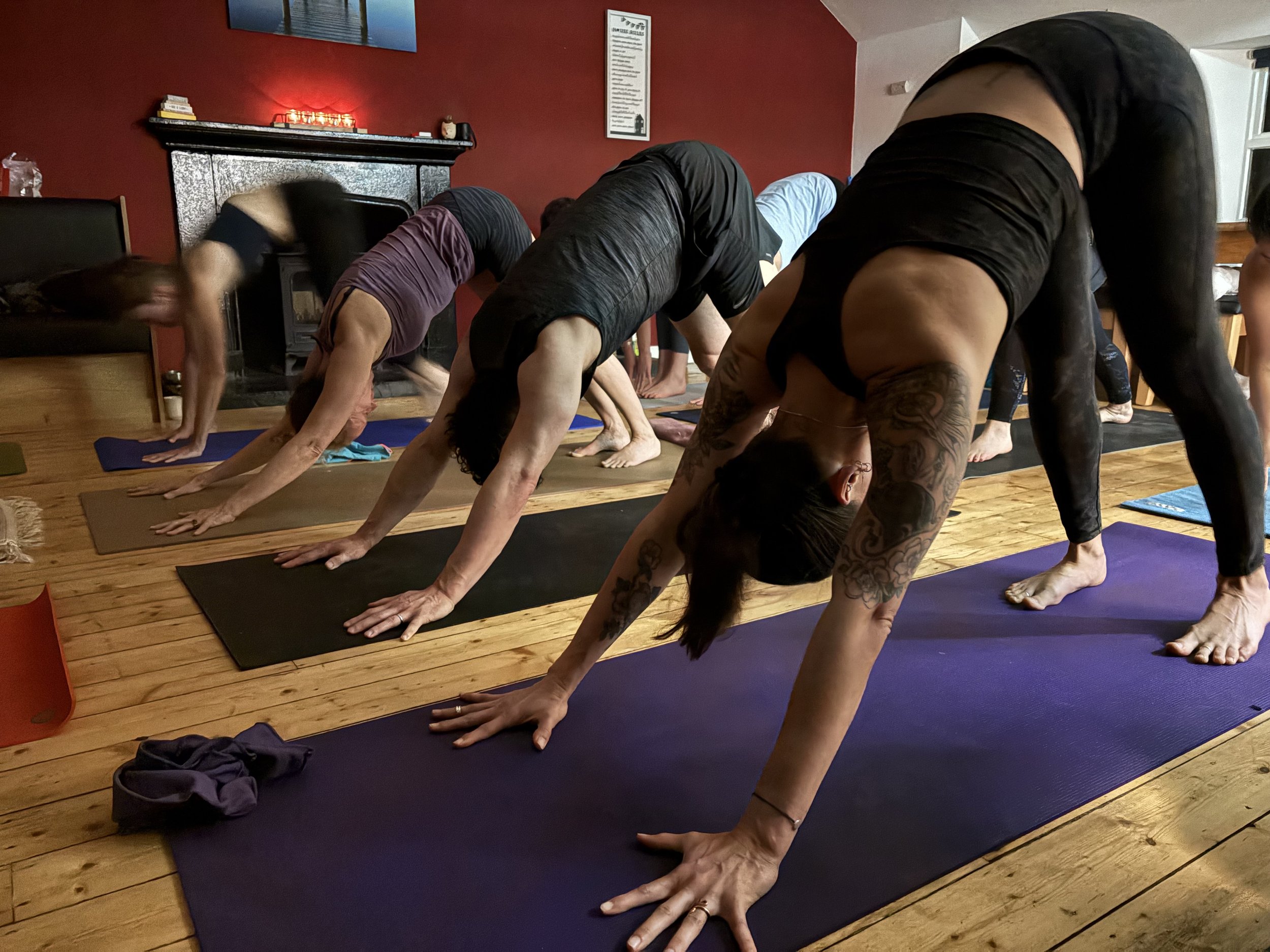
Progressing in Ashtanga Yoga: A mindful journey of breath, alignment, and adaptability, honouring each student’s unique path to growth.
A unique approach to learning Ashtanga Yoga
The progression of Ashtanga students through Iyengar inspired methodology, as taught by Christian Pisano, emphasises a deeply refined approach through three pillars of asana practice, blending precision, dynamism, and individual adaptation.
1. Vinyasa: A new student begins learning vinyasa by focusing on the harmonious connection between breath and movement, creating a flowing rhythm that links postures together. Each movement is paired with either an inhale or an exhale, establishing a meditative flow while fostering physical engagement. Within this dynamic sequence, moments of stillness in each posture are introduced, allowing the student to pause, refine alignment, and observe the breath while holding the pose. These still moments offer an opportunity to balance effort and ease, cultivating stability, awareness, and presence. This integration of movement and stillness builds the foundation for a mindful and embodied practice.
2. Vinyasa Krama: As students develop stability in the practice, the next step is to mindfully transition from one asana to the next. Vinyasa Krama is the deliberate and systematic progression of postures, where each movement is thoughtfully linked to the breath and sequenced to prepare the body and mind for the next stage of practice. This method emphasises precision, alignment, and a gradual buildup of strength, stability, and awareness, ensuring that students move through their practice with purpose and ease. By breaking down complex movements into manageable steps, Vinyasa Krama allows practitioners to deepen their understanding of postures while respecting their individual capabilities, fostering a sense of balance and mindfulness throughout the journey.
3. Viniyoga: The final stage adapts the practice to the individual’s unique needs, integrating Christian Pisano’s profound teachings on embodiment and mindfulness. This phase encourages a more introspective and therapeutic approach, where the practice becomes a means of self-inquiry and union with the deeper aspects of yoga.
This methodology combines the flowing nature of Ashtanga with Iyengar’s precision and personalisation, offering a transformative path for physical, mental, and spiritual growth.
“The practice is not about doing, but about undoing what is in the way of our natural state.”
The Series of Ashtanga Yoga: A Detailed Guide
Ashtanga Yoga is a dynamic and disciplined practice popularized by Sri K. Pattabhi Jois and rooted in the ancient Yoga Korunta. It consists of six progressive series, each linking breath (Ujjayi), gaze (Drishti), and movement (Vinyasa) to create a meditative flow that challenges body and mind.
Primary Series (Yoga Chikitsa – “Yoga Therapy”)
Focuses on detoxification, spinal alignment, and building strength and flexibility.
Sections include:
Sun Salutations: Breath-led warm-ups.
Standing Poses: Develop balance and stability.
Seated Poses: Forward bends and hip openers.
Backbends & Finishing: Conclude with calming postures.
This foundational series supports physical and energetic cleansing
Intermediate Series (Nadi Shodhana – “Nerve Cleansing”)
Clears energy channels (nadis) for improved prana flow.
Key elements: Deep backbends, twists, and strength poses.
Builds emotional balance, flexibility, and inner focus.
Advanced Series (Sthira Bhaga – “Strength and Grace”)
Divided into Series A–D, requiring high levels of strength, flexibility, and control.
Features: Arm balances, deep backbends, and demanding transitions.
Embodies the union of power and grace, reserved for advanced practitioners.
Progression & Mastery
Students progress gradually, often spending years in one series. As Pattabhi Jois said, “Practice, and all is coming.”
Core Techniques
Ujjayi Breath: Creates heat and focus.
Bandhas: Internal locks (Mula, Uddiyana, Jalandhara) direct energy and provide stability.
These elements are essential across all series.
Conclusion
Ashtanga Yoga’s structured series provide a roadmap for personal transformation, offering physical, mental, and spiritual growth. While the practice requires dedication and discipline, the rewards are profound, allowing practitioners to cultivate strength, flexibility, and inner peace. Whether working through the foundational Primary Series or exploring the challenging Advanced Series, the journey through Ashtanga Yoga is a lifelong practice of self-discovery.
“There is no real secret to Ashtanga yoga other than consistency, just show up and keep showing up, that is the secret.”