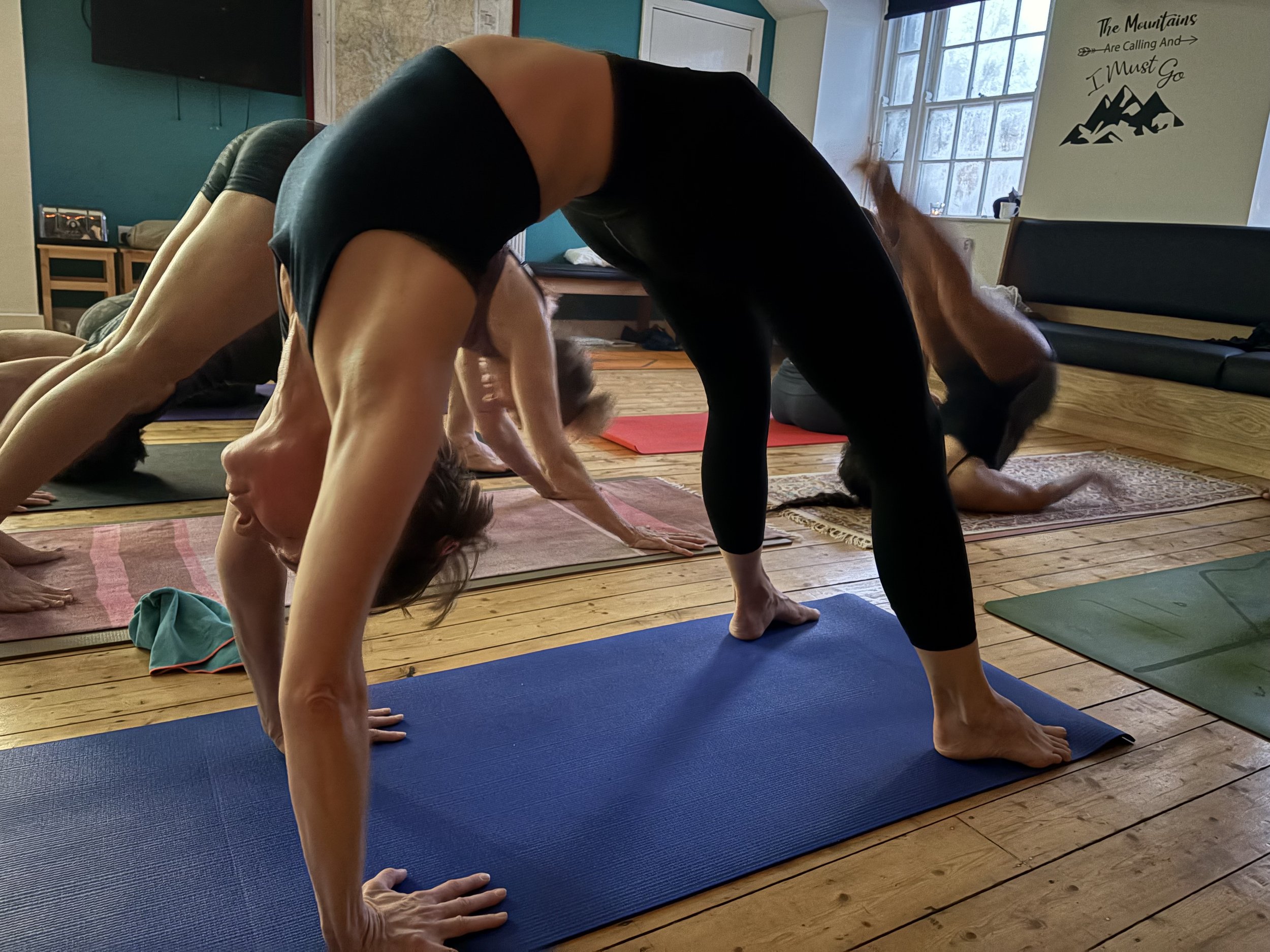
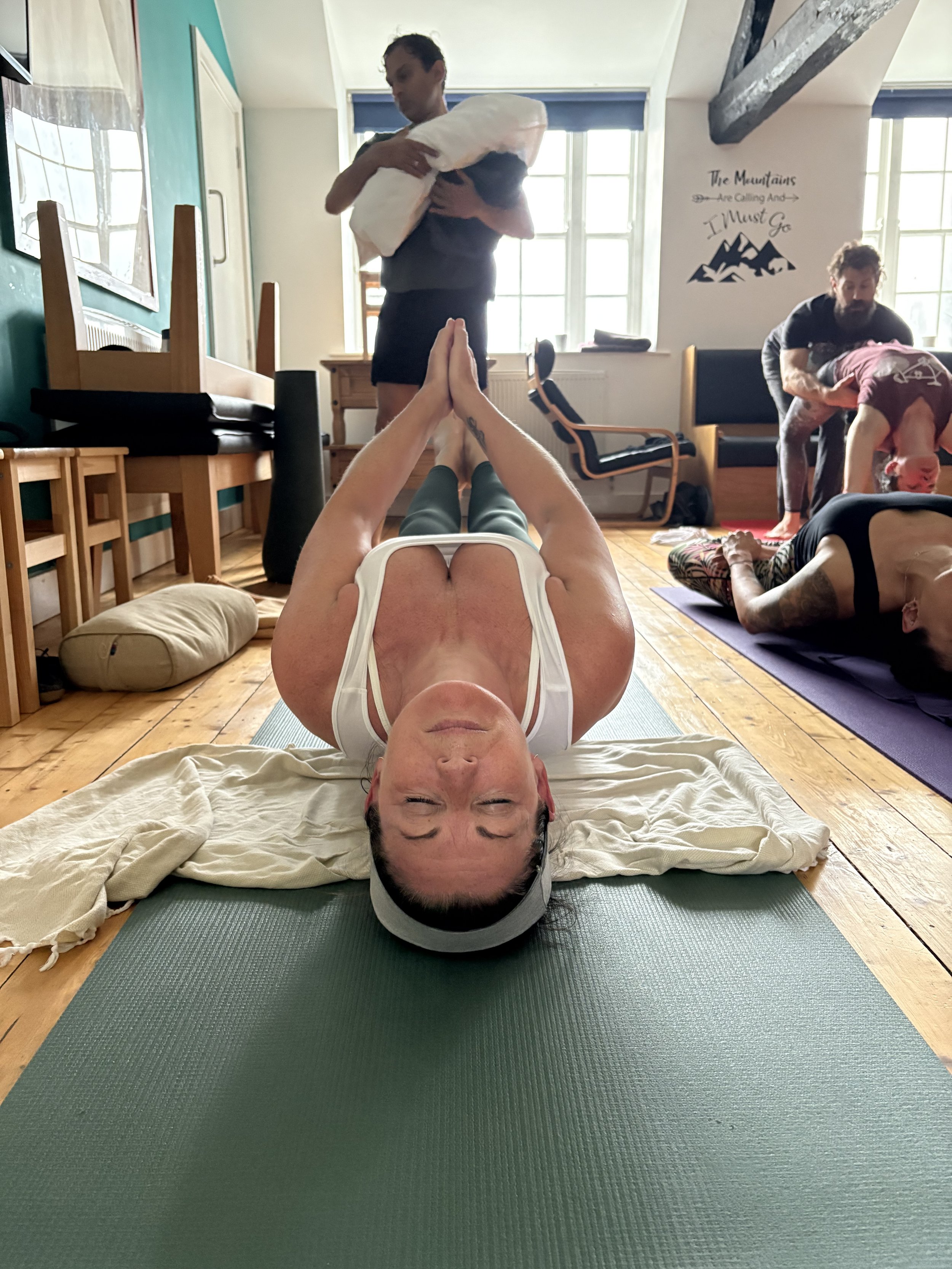
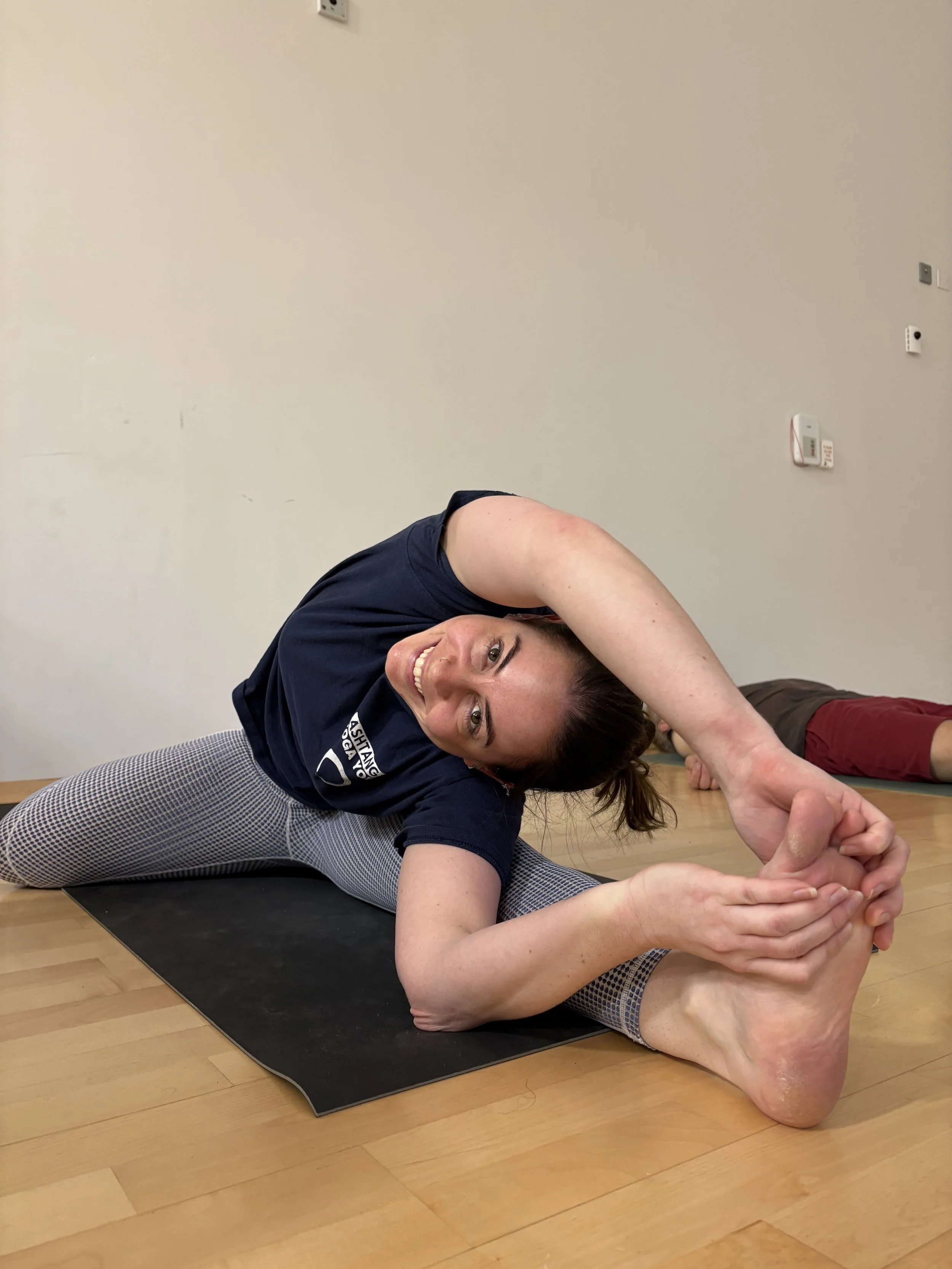
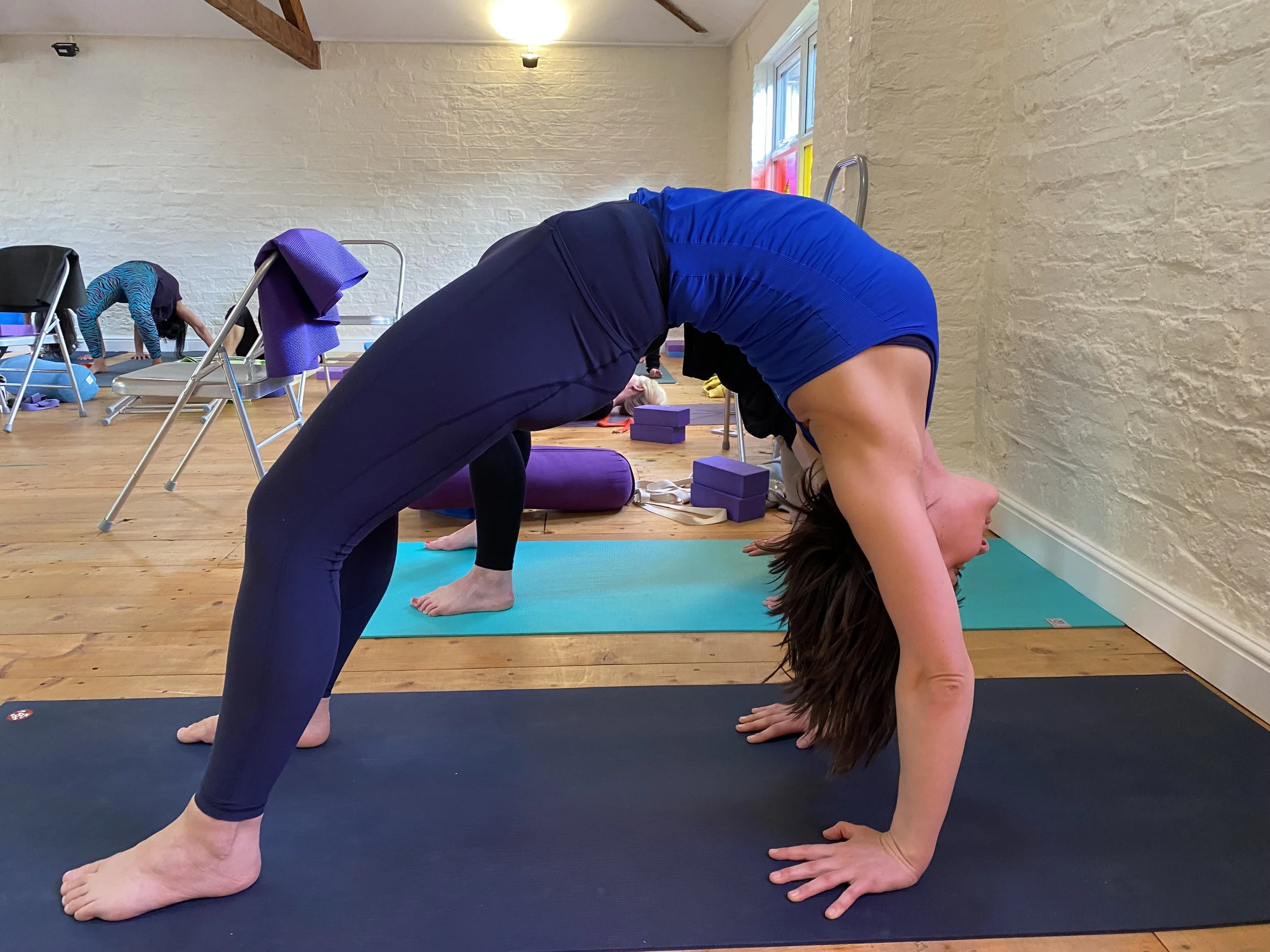
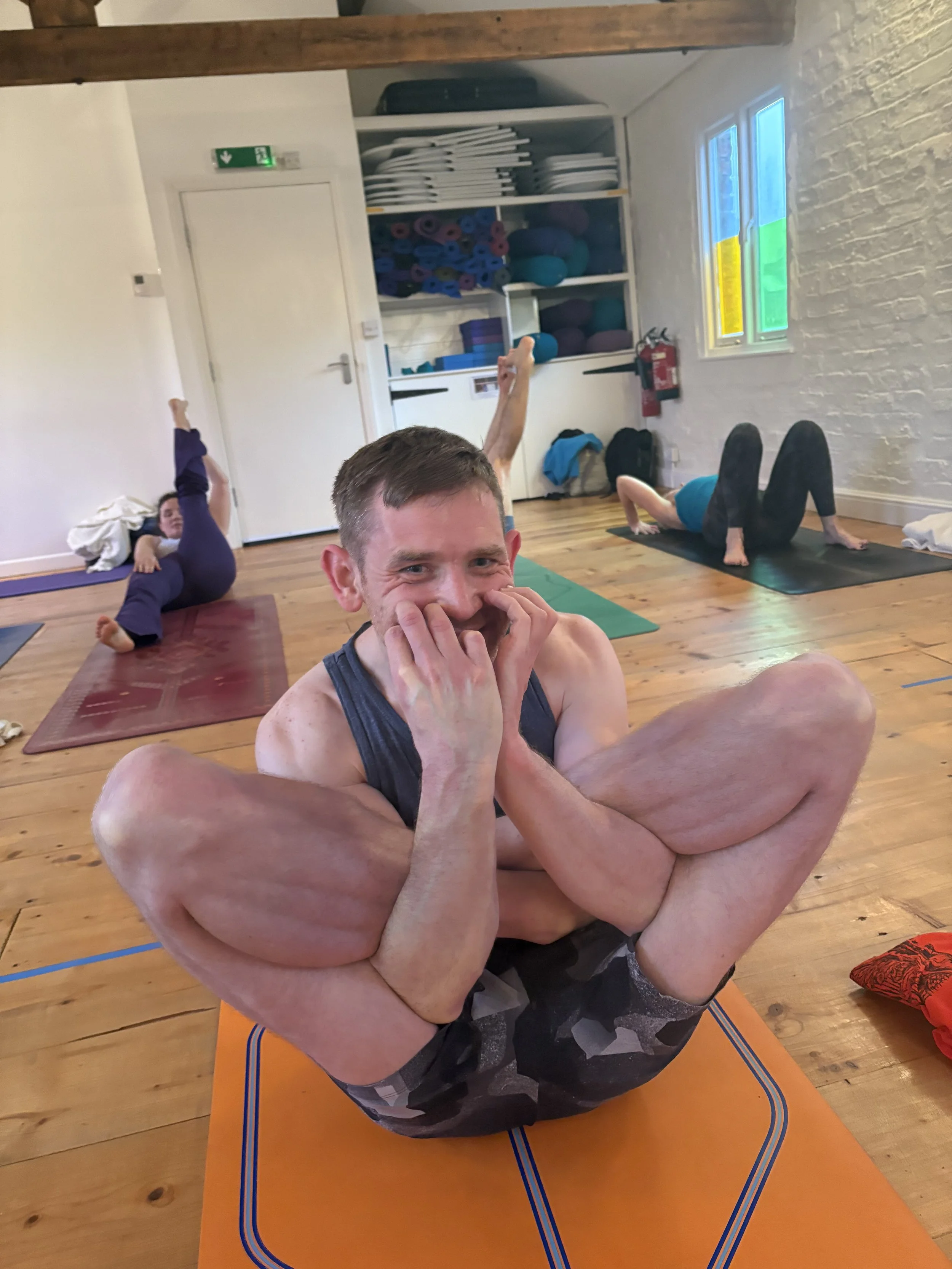
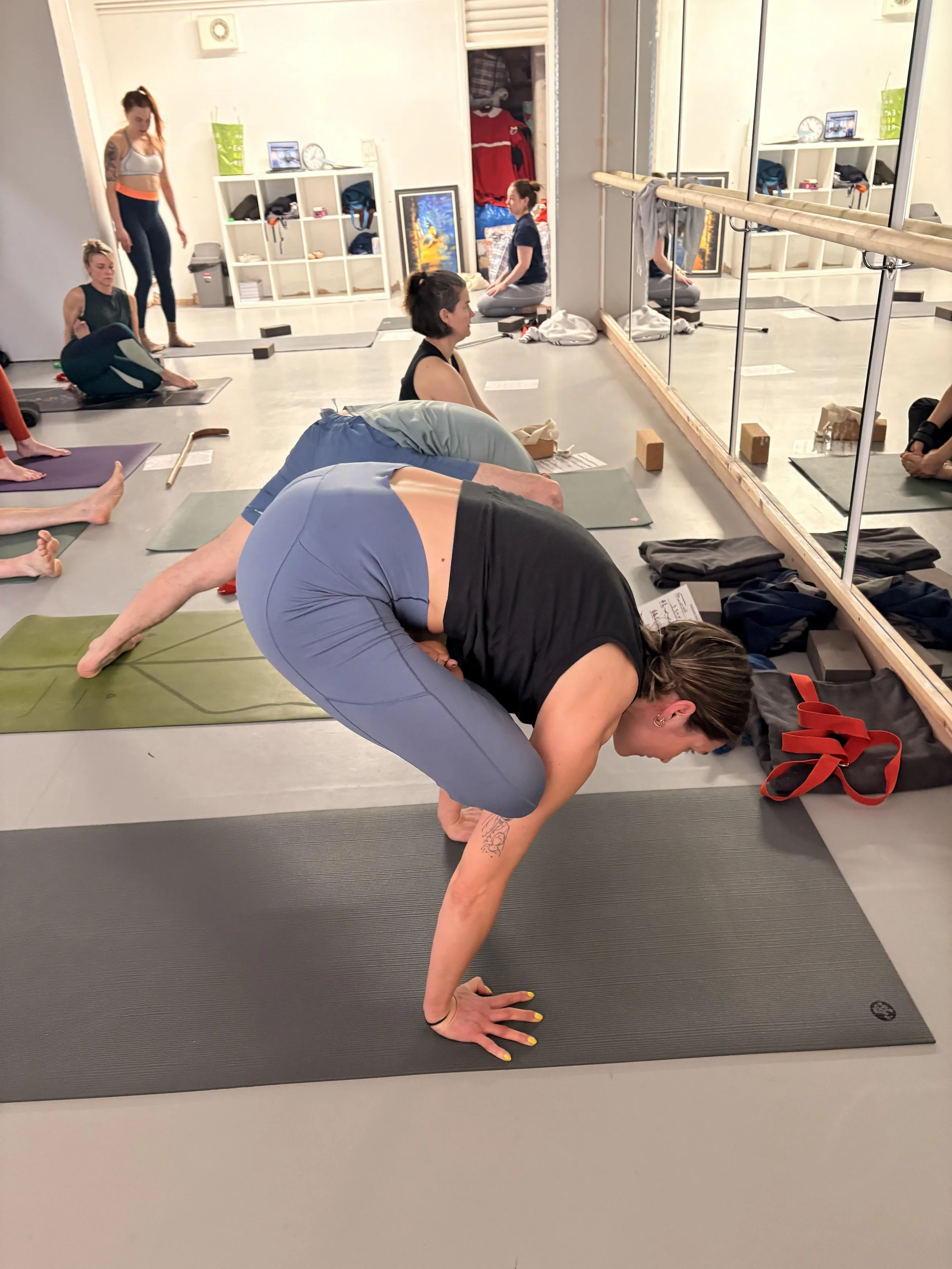
Breath. Movement. Discipline. Flow
Driven by curiosity and rooted in tradition, our practice blends breath, movement and mindful discipline to create a space for exploration, growth and transformation. We trust the process, allowing ourselves to move into flow rather than resist it.
Guided Self-Practice
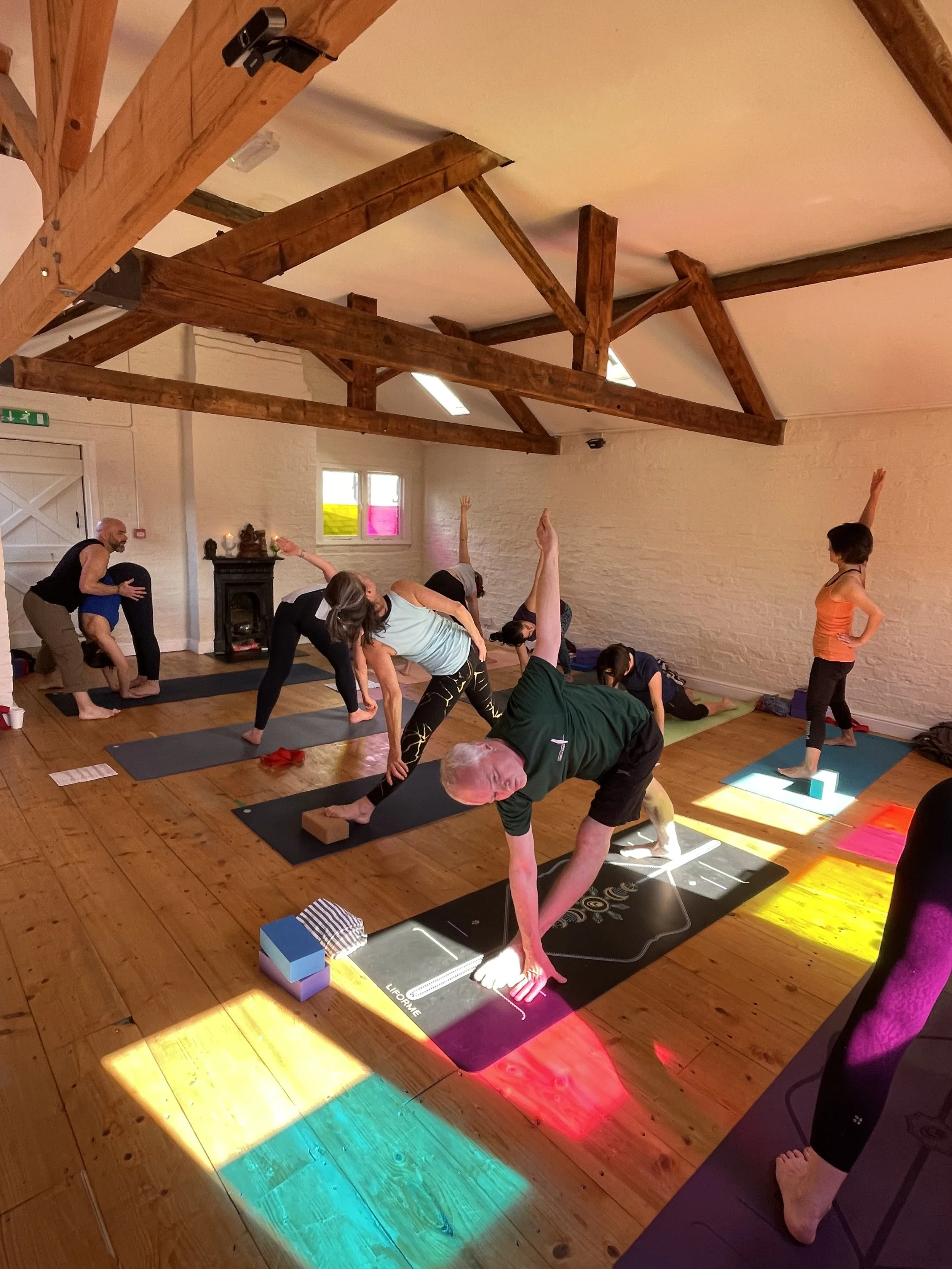
Guided Self-Practice, rooted in the Mysore method of Ashtanga Vinyāsa Yoga, allows students to develop their practice at their own pace within a shared practice space. Rather than following a led class, each student receives individual guidance, personalised instruction and ongoing support, developing greater independence, self-awareness and understanding of the relationship between breath, movement and attention.
Our approach is grounded in Ashtanga Vinyāsa but embraces an intelligent and adaptable approach to practice. We draw on the precision and therapeutic insights of Iyengar Yoga, alongside the progressive sequencing principles of Vinyāsa Krama. Strength, mobility, stability and corrective exercise are integrated into practice where appropriate, with thoughtful use of props, adaptations and hands-on guidance.
Students may follow the traditional Ashtanga sequences, work with modified or therapeutic programmes, or explore adapted sequences according to their experience, needs and aspirations. The emphasis is on preserving the vitality of the tradition while developing an individual, sustainable and intelligent practice that evolves over time.
Ashtanga Vinyāsa & Vinyāsa Krama
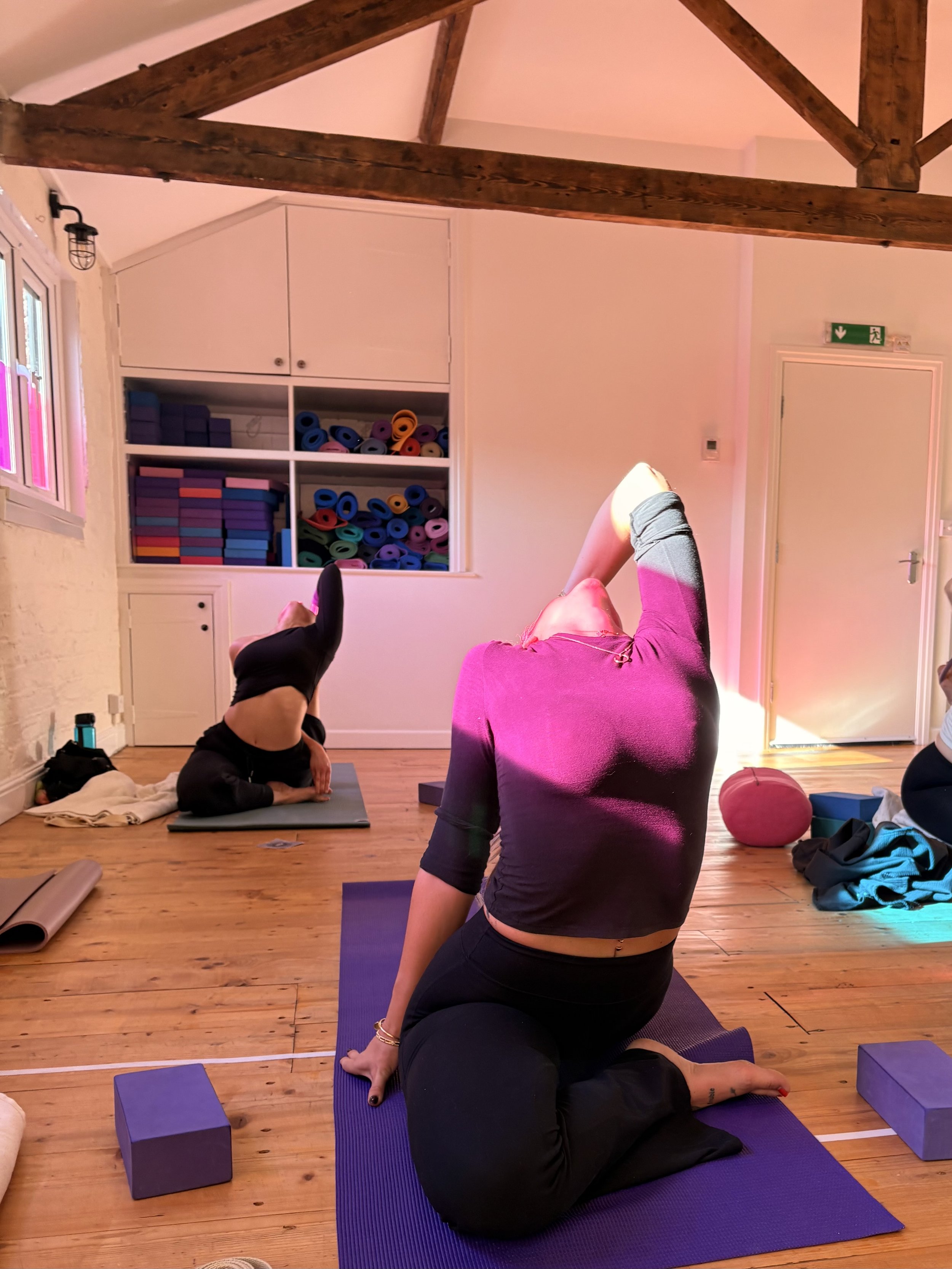
Ashtanga Vinyāsa and Vinyāsa Krama are breath-led approaches to yoga that unite movement, posture and breath through the principles of vinyāsa. Both develop strength, mobility, stability and concentration, cultivating a greater awareness of body, breath and mind.
Ashtanga Vinyāsa follows a progressive series of postures, learnt and developed over time under the guidance of a teacher. The repetition of a consistent sequence provides a framework for refining movement, alignment, breath and attention, allowing the practice to deepen through familiarity and experience.
Vinyāsa Krama shares these principles but offers greater freedom in sequencing. Each practice is thoughtfully constructed around a particular intention, movement family or posture, with each stage preparing the body for what follows. Practices may explore backbends, forward extensions, twists, arm balances or inversions, with appropriate preparation, progression and counterposes.
Together, these approaches provide both structure and adaptability, combining the consistency of Ashtanga with the intelligence and creativity of progressive sequencing. The emphasis is on developing a practice that is purposeful, responsive and appropriate to the individual.
-
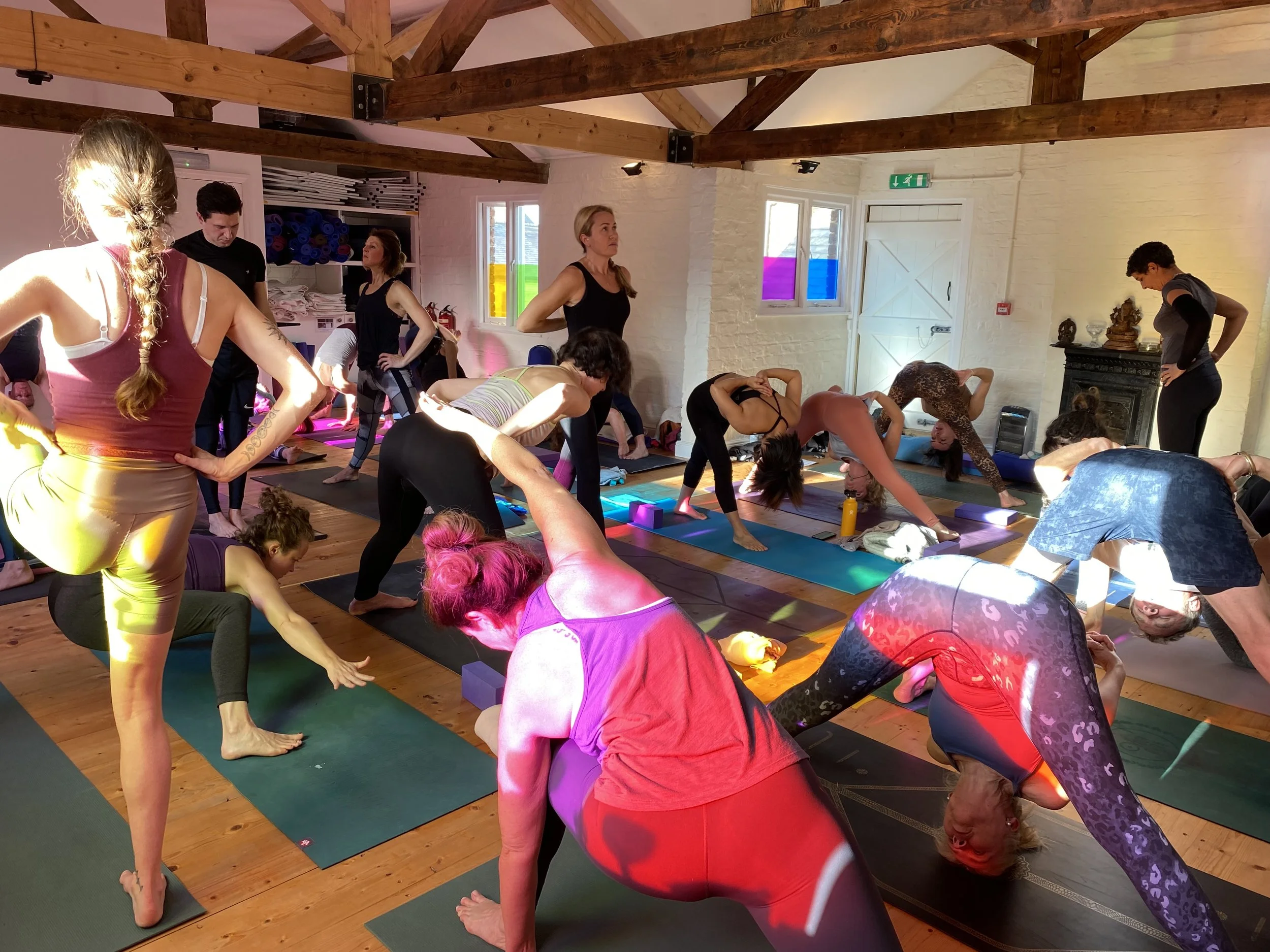
Guided Self Practice
Monday 06:00-08:00am GMT
Tuesday 06:00-08:00am GMT
Wednesday 06:00-08:00am GMT
Thursday 06:00-08:00am GMT
Although rooted in the Ashtanga Yoga tradition, the Guided Self Practice format is an intelligent and adaptable way of teaching. Depending on the individual, practice may follow the traditional Ashtanga sequences, a progressive Vinyāsa Krama approach, or a therapeutic Haṭha Yoga practice incorporating precise alignment, breath awareness, and the skilful use of props. Postures may be modified, substituted, or developed progressively according to each student’s needs, experience, and physical capacity.
-
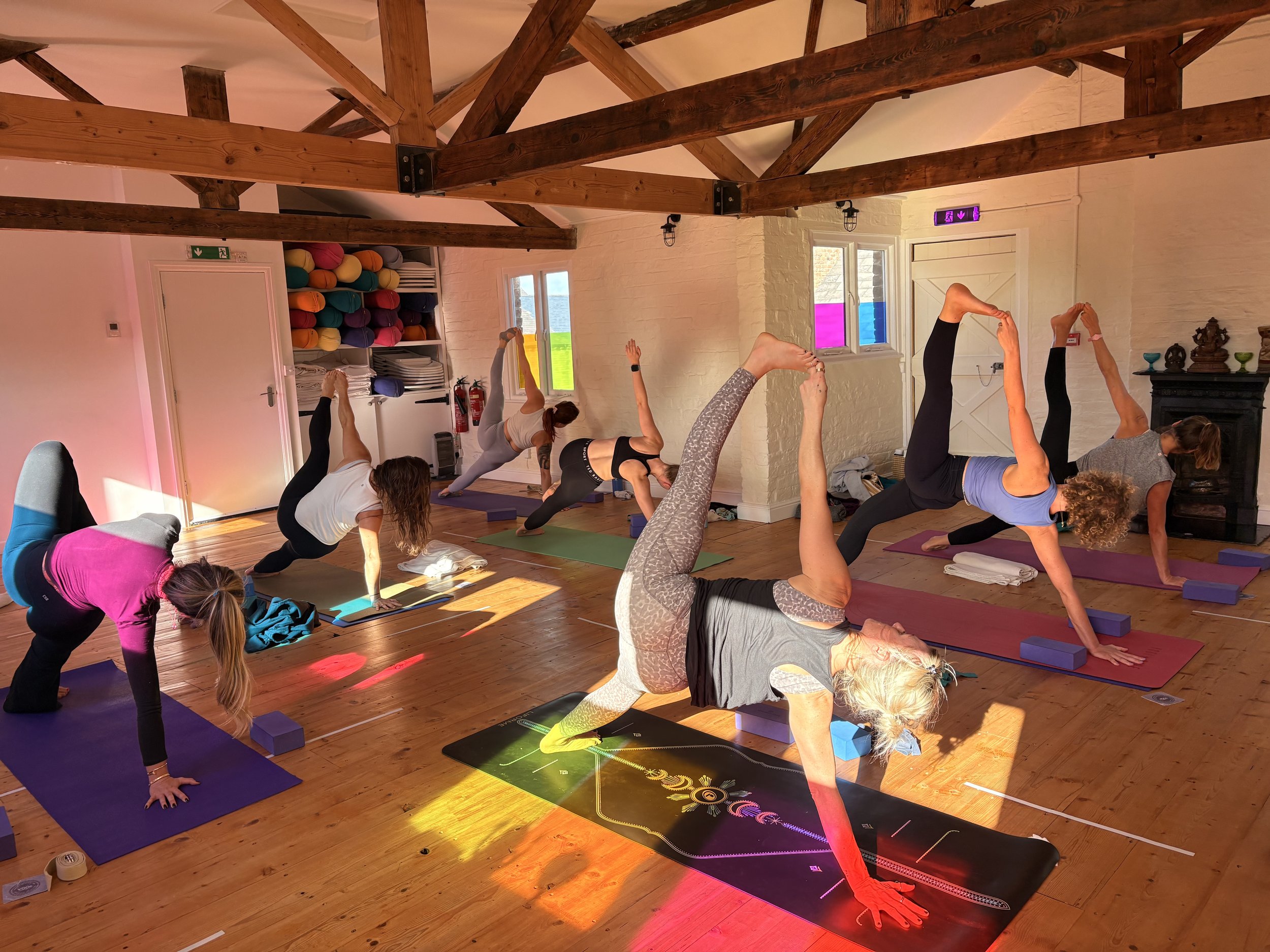
Vinyāsa Krama
Monday 10:45am-12:00pm GMT
Friday 10:45am-12:00pm GMT
A dynamic 75-minute led class fusing traditional Ashtanga Vinyasa with the precise alignment of Iyengar-influenced Vinyasa. Rooted in traditional methodology, this practice combines breath, movement, drishti, and focused attention through intelligently sequenced postures.Inspired by the early teachings of Krishnamacharya - the father of modern yoga, and foundational Hatha yoga methods, expect a strong, fast-paced, breath-driven experience.
-
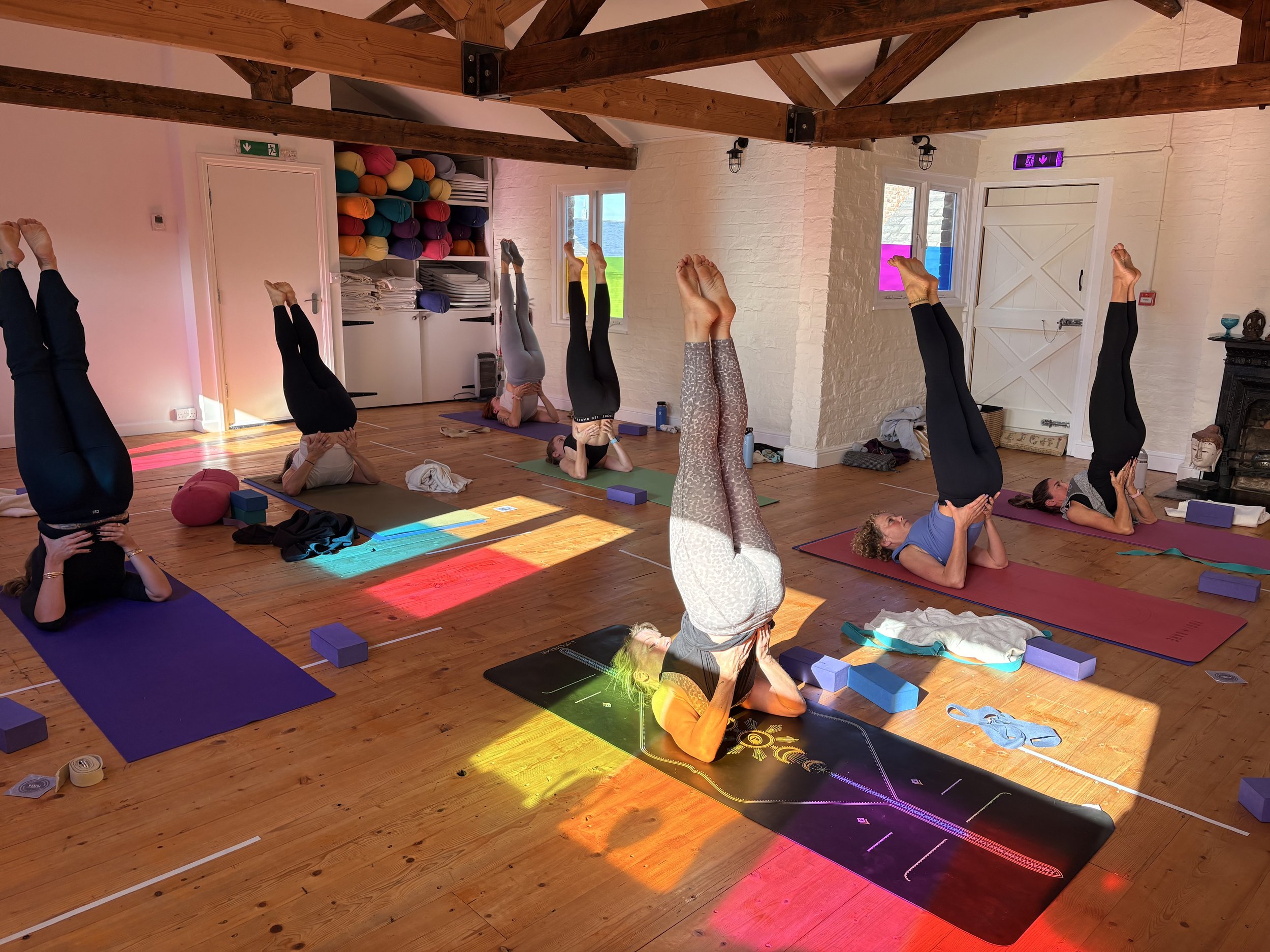
Ashtanga Vinyāsa
One class per month, generally held on a Saturday.
Ashtanga Vinyāsa follows a progressive series of postures, learnt and developed over time under the guidance of a teacher. The repetition of a consistent sequence provides a framework for refining movement, alignment, breath and attention, allowing the practice to deepen through familiarity and experience.